
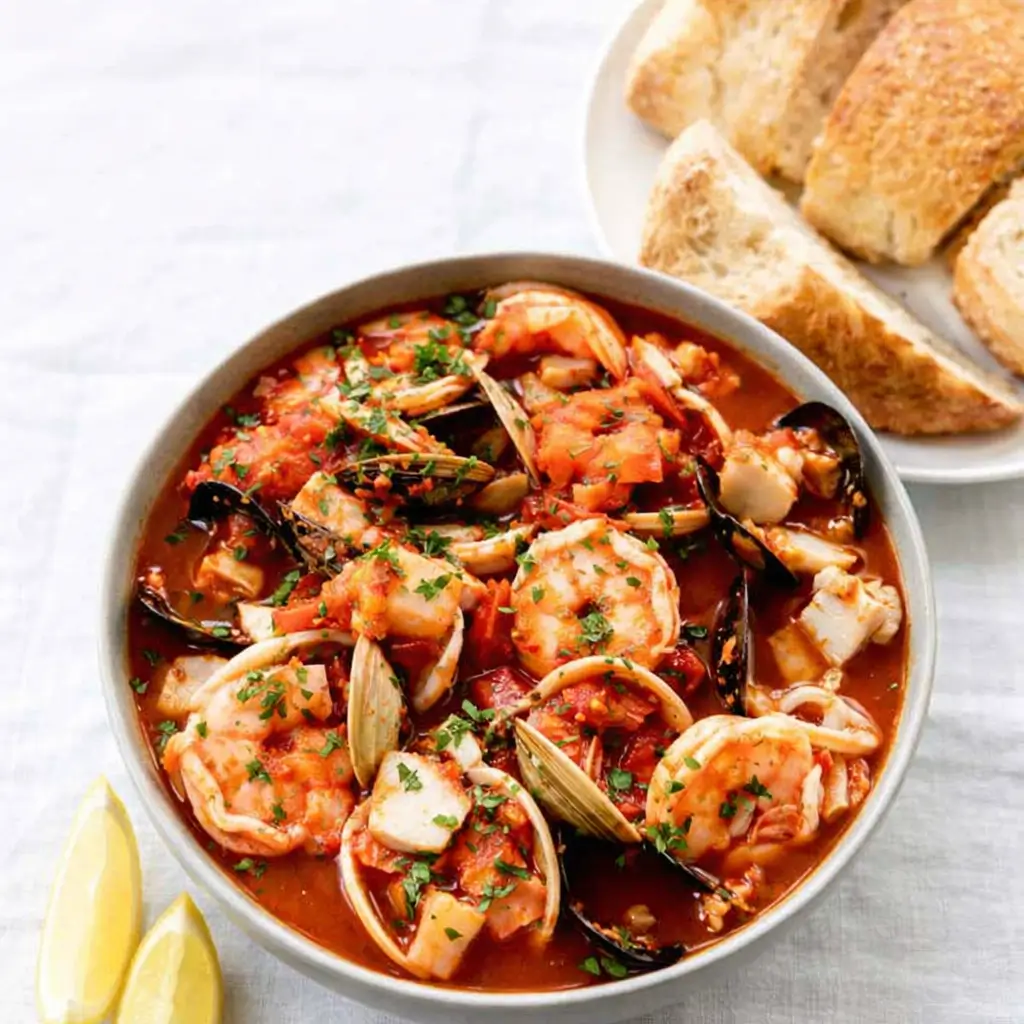
If there’s one dish that can make you feel like you’re sitting by the Bay, watching the fog roll in while a warm bowl steams up your glasses, it’s Cioppino. This Italian-American seafood stew has a way of wrapping you in comfort while tasting like a coastal vacation in every spoonful.
It’s rich, tomatoey, and bursting with layers of ocean flavor — shrimp, crab, clams, mussels, and white fish all cozied up in a broth that’s good enough to sip straight from the pot. And let’s be honest, who can resist dunking crusty sourdough into a stew like that? Cioppino is a star at dinner parties and family gatherings alike. In this recipe, we’re walking through every detail step by step, so you’ll feel confident making this restaurant-worthy meal right at home — no fancy chef hat required.
Table of Contents
What is Cioppino?
Cioppino (pronounced “chuh-PEE-no”) is a hearty seafood stew that was born right on the docks of San Francisco in the late 1800s. Italian fishermen, known as “ciuppin” makers from Liguria, would toss their leftover catch of the day into a pot with tomatoes, wine, and herbs — and that’s how this classic came to life. It’s part Italian tradition, part Californian innovation. Today, Cioppino remains one of the most comforting and flavorful seafood dishes around. Think of it as the love child between an Italian tomato stew and a fisherman’s dream.
What makes Cioppino truly special is its flexibility. You can throw in whatever seafood looks freshest at your market. Crab legs? Go for it. Halibut or cod? Absolutely. Mussels and clams? Always. And when you ladle it into bowls and pass around that golden, crusty bread, you’ll see why this stew has stood the test of time.
Reasons to Try Cioppino
Let’s talk about why you’re going to love making Cioppino at home. First off, it’s downright impressive — the kind of dish that makes people think you spent all day in the kitchen (spoiler: you didn’t). It’s also a one-pot wonder, meaning cleanup is surprisingly minimal. Plus, it’s completely customizable. Not a fan of crab? Use scallops. Prefer cod over halibut? Easy swap.
Cioppino is also surprisingly light despite its richness. The tomato base gives it a comforting warmth without feeling heavy, and the seafood adds lean protein. It’s a perfect choice for a cozy family dinner, a romantic night in, or even a small dinner party. For a heartier cold-weather option, you might also love my Creamy Spinach and Potato Garden Soup or the brothy Japanese Glass Noodle Soup. But Cioppino — oh, it’s the showstopper.
Ingredients Needed to Make Cioppino
Here’s everything you’ll need for the best homemade Cioppino recipe:
Base Ingredients:
- ¼ cup olive oil
- 1 bulb fennel, chopped
- 1 onion, chopped
- 3 shallots, diced
- 4–6 cloves garlic, minced
- ¼ teaspoon crushed red pepper flakes (or more for heat lovers)
- 2 teaspoons kosher salt
- 2 tablespoons tomato paste
- 1 cup dry white wine (like chardonnay or sauvignon blanc)
- 1 bay leaf
- ½ teaspoon dried oregano
- Two 28-ounce cans of San Marzano tomatoes (whole or crushed)
- ½ cup chopped fresh parsley
- Lemon wedges and crusty sourdough for serving
Seafood Selection:
- 1–2 lbs dungeness or king crab (in shell)
- 1 lb large raw shrimp (shells and tails on)
- 1 lb white fish like halibut, cod, or sea bass, cut into 1-inch pieces
- 1 lb fresh mussels (debearded)
- 1 lb fresh clams (rinsed)
If you can’t find one of these, don’t panic. You can mix and match — scallops or calamari also shine here.
Instructions to Make Cioppino – Step by Step
Step 1: Make the Seafood Stock
This first step might sound fancy, but it’s easier than it looks. You’ll use the shells from your crab and shrimp to make a quick, flavorful stock that takes this Cioppino from “good” to “holy moly, what is this magic?” Start by removing the crab meat from the shells, setting the meat aside, and tossing those shells into a large stock pot. Do the same with the shrimp shells and tails. Cover everything with water, just enough to submerge it by about an inch. Sprinkle in a pinch of salt and bring it to a gentle simmer. Once it’s lightly bubbling, add your clams and mussels right on top — don’t stir. Cover and let them steam for 2–3 minutes, just until they open up. When they do, take the pot off the heat. Remove the clams and mussels, set them aside in a bowl, and get ready to strain your stock.
Step 2: Prepare the Tomato Base
Grab your Dutch oven or large soup pot and heat up that olive oil over medium heat. Toss in the chopped fennel, onion, and salt, then stir until they become soft and translucent — about 8–10 minutes. Your kitchen will start to smell incredible at this point. Add in your garlic and red pepper flakes, cooking for just a minute so the garlic doesn’t burn. Stir in the tomato paste until it coats everything, then pour in the white wine to deglaze the pot. Let it simmer for about 2 minutes. Finally, add your tomatoes, bay leaf, and oregano. Use a spoon to break up the tomatoes a bit.
Step 3: Strain and Add the Seafood Stock
Set your fine mesh strainer over a bowl or large measuring cup, and line it with cheesecloth if you’ve got it. Carefully pour your seafood stock through, leaving behind any grit or sand at the bottom. Measure out about 4 cups of this golden liquid and pour it into your tomato base. Bring everything to a gentle simmer, cover, and let it bubble away for 30 minutes. This step allows all the flavors to mingle — the sweetness from the fennel, the acidity from the tomatoes, and that deep ocean essence from the stock.
Step 4: Add the Seafood (Timing is Key!)
This is where the magic happens — adding your seafood in layers so everything cooks perfectly. Before you start, cut your fish into 1-inch chunks and season them with salt, pepper, and a drizzle of olive oil. Bring your pot back to a simmer, then gently stir in the fish. Cover and let it cook for 3 minutes. Add the shrimp and crab meat next, simmering for another 2–3 minutes until the shrimp turn pink and tender. Finally, stir in your steamed clams and mussels. The stew will look and smell like something out of a coastal dream.
Step 5: Serve and Savor
Taste the broth and adjust with a bit more salt or red pepper flakes if you’d like a kick. Sprinkle chopped parsley over the top and ladle the Cioppino into warm bowls. Serve it with lemon wedges and thick slices of sourdough — preferably toasted so they can soak up every drop. Don’t forget a bowl for discarded shells and a stack of napkins — Cioppino is delightfully messy, and that’s part of the fun.
For another hearty, comforting dish to try next, check out my Creamy Chicken Enchilada Soup or this cozy Veggie Pot Pie Soup — both are perfect for chilly evenings when you need something soul-warming.
What to Serve with Cioppino
While Cioppino is a meal in itself, it shines with a few simple sides. Crusty bread is non-negotiable — you’ll need it for dipping into that rich tomato broth. A crisp green salad or roasted asparagus adds a fresh balance. If you’re serving this for guests, a glass of chilled Sauvignon Blanc or even a sparkling water with lemon works beautifully.
Key Tips for Making Cioppino
- Use fresh seafood. It makes a world of difference in flavor and texture.
- Don’t overcook. Add each type of seafood just before serving to keep it tender.
- Skip the “cooking wine.” Use a decent dry white wine or substitute with white wine vinegar if needed.
- Make ahead. You can prepare the tomato base and stock the day before — just reheat and add your seafood when you’re ready to serve.
Storage and Reheating Tips for Cioppino
Cioppino is best enjoyed fresh, but you can make parts of it ahead. Store the tomato base separately from the seafood in an airtight container in the fridge for up to 2 days. When ready to serve, reheat the base, then add your fresh seafood and simmer until done. Leftovers should be eaten within a day. If you want to save some for later, freeze just the tomato broth (without seafood).
For proper seafood storage and safety tips, the USDA Seafood Handling Guide is a helpful resource.
FAQs
Can I make Cioppino without wine?
Yes! Substitute white wine with a splash of white wine vinegar or seafood stock for similar acidity.
Can I use frozen seafood?
You can, but thaw it fully and pat it dry before adding it to the pot.
What’s the best bread for dipping?
Sourdough, baguette, or any hearty crusty bread that holds up well in broth.
Can I make it spicy?
Absolutely. Just increase the red pepper flakes or add a dash of hot sauce.
Final Thoughts
Cioppino is more than a recipe — it’s a celebration of fresh seafood, slow-simmered comfort, and the joy of sharing a meal that brings people together. Every spoonful carries a story of fishermen, families, and coastal kitchens where love and flavor meet. Whether you’re cooking for your family or hosting a cozy dinner with friends, this Cioppino recipe will make you feel like you’ve just brought a little piece of San Francisco into your kitchen. Serve it warm, laugh a lot, and always keep the bread basket full.
Visit our Pinterest for regular slow cooker recipe updates, or join our Facebook discussions where cooking fans exchange their favorite hearty meal ideas.
PrintCioppino: The Ultimate San Francisco Seafood Stew Recipe

Our homemade Cioppino seafood stew recipe is here to impress, with a flavorful tomato broth and loaded with your favorite seafood. Don’t forget to serve it with crusty sourdough, for dipping.
- Prep Time: 15 minutes
- Cook Time: 45 minutes
- Total Time: 1 hour
- Yield: 6 servings 1x
- Category: Main Course
- Method: Stovetop
- Cuisine: American, Italian
Ingredients
- 1/4 cup olive oil
- 1 bulb fennel, chopped
- 1 onion, chopped
- 3 shallots, diced
- 4–6 cloves garlic, minced
- 1/4 teaspoon crushed red pepper flakes, or more to taste
- 2 teaspoons kosher salt
- 2 tablespoons tomato paste
- 1 cup dry white wine
- 1 bay leaf
- 1/2 teaspoon dried oregano
- 2 (28oz) cans San Marzano whole peeled tomatoes, or use crushed tomatoes
- 1/2 cup fresh chopped parsley
- Lemon wedges, for serving
- Sourdough or crusty artisan bread, for serving
- Seafood:
- 1–2 lbs dungeness or king crab, in the shell
- 1 pound large raw shrimp, with shells and tails
- 1 pound fresh white fish, like halibut, cod, sea bass, cut into 1-in pieces
- 1 pound fresh mussels, debearded
- 1 pound fresh clams, rinsed
Instructions
1. Make Seafood Stock: Use kitchen shears to cut open the crab legs and remove the meat, then place the cracked shells into a stock pot. Remove shells and tails from shrimp then add to the stockpot. Add enough water to the pot to cover the shells by about an inch. Add a pinch of salt. Cook over medium high heat until water reaches a bare simmer. Add clams and mussels on top (don’t stir) and cover pot. Cook for 2-3 minutes, until shells open up. Uncover, remove from heat and set aside.
2. Tomato Base: Add oil to a large Dutch oven over medium heat. Stir in onion, fennel and 2 teaspoons kosher salt. Cook until onion is soft and translucent, 8-10 minutes. Stir in garlic and red pepper flakes then cook for 1 minute. Add tomato paste and stir well. Add wine and cook for 2 minutes. Stir in crushed tomatoes, bay leaf, and oregano.
3. Strain Stock: Set clams and mussels aside and strain seafood stock through a fine mesh strainer with a cheesecloth over it (if you don’t have a cheesecloth, just don’t add the bottom tablespoons of liquid, that may have sand in it) into a measuring cup. Add 4 cups seafood stock to the pot. Bring to a simmer, reduce heat, cover pot, and simmer for 30 minutes.
4. Add seafood: Just before you’re ready to serve the stew, bring to a simmer, stirring. Cut the fish into 1 inch pieces and drizzle fish and shrimp with a little oil, and season with salt and pepper. Add the fish, cover, reduce heat and simmer for 3 minutes. Stir in shrimp and crab and simmer about 2-3 minutes, just until shrimp are pink. Stir in steamed clams and mussels. Taste the sauce and add more seasoning, if needed. Sprinkle with fresh parsley.
5. Serve: Ladle stew into bowls and serve with fresh lemon wedges, crusty bread, and extra bowls for placing shells in (and lots of napkins)!
Notes
Make Ahead Instructions: Make the tomato base and seafood stock a few hours or up to a night before serving.
Freezing Instructions: I don’t recommend freezing cioppino with the seafood, as the seafood will overcook when rewarmed. But any leftover tomato broth could be frozen and used another day, with fresh seafood.
Seafood Variations: You could replace the crab with scallops (add them at the same time as the fish). Calamari would also be a great addition, and can be added near the end. I don’t recommend using oysters or salmon as their flavor may overpower the dish.
Crab: You can add the crab, in its shell, to the broth, if you want to serve it in the shell, but I think the shells help add rich flavor to the seafood stock.
Wine: Don’t use “cooking wine”, but instead choose an inexpensive dry white wine, like chardonnay, sauvignon blanc or pinot grigio. If you’re against cooking with wine, you can omit it, or add a little splash of white wine vinegar.
Seafood Stock: You could substitute 4 cups store-bought seafood stock, and add the clams and mussels at the same time as the shrimp and crab.
Nutrition
- Serving Size: 1 bowl
- Calories: 381
- Sugar: 4g
- Sodium: 1666mg
- Fat: 13g
- Saturated Fat: 2g
- Unsaturated Fat: 9g
- Trans Fat: 0.01g
- Carbohydrates: 13g
- Fiber: 2g
- Protein: 45g
- Cholesterol: 191mg