
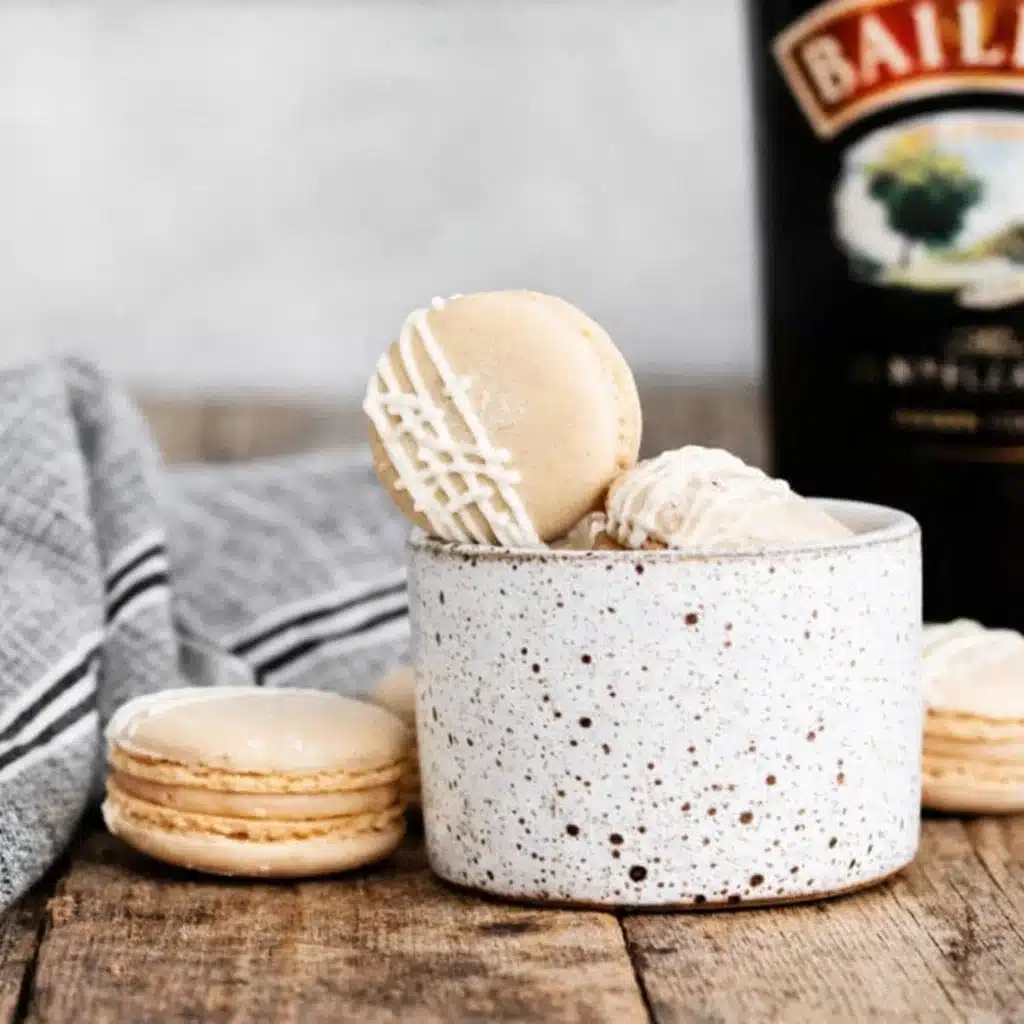
Light, airy, and utterly decadent — Irish Cream Macarons are the elegant little dessert you didn’t know you needed until now. These dainty French cookies might look like they belong in a fancy patisserie, but with this step-by-step guide, you’ll be whipping up bakery-quality Irish Cream Macarons right in your kitchen. The combination of crisp shells, chewy centers, and a smooth Irish cream filling is what dessert dreams are made of. If you’ve ever been intimidated by macarons, you’re not alone — but don’t worry, we’re walking through every stage together (and yes, we’ll talk about how to fix those pesky hollow shells too).
With a little patience, a whisk, and maybe a cup of coffee with a splash of Irish cream on the side, you’ll soon be serving these little beauties at every special occasion — or, honestly, just on a random Tuesday.
Table of Contents
What is Irish Cream Macarons?
Irish Cream Macarons are delicate French sandwich cookies made with almond flour, sugar, and egg whites, creating a crisp outer shell and a soft, chewy middle. What makes these macarons stand out is their luscious Irish cream filling — a silky blend of cream cheese, powdered sugar, Irish cream liqueur, and a touch of cinnamon. The result is a grown-up twist on a classic that tastes like dessert and a cocktail had the most delightful baby. Think of them as the chic cousin of your favorite holiday cookies — elegant, boozy, and absolutely irresistible.
These cookies are perfect for St. Patrick’s Day, holiday parties, or whenever you’re craving something sweet and fancy without needing an actual passport to Paris. If you love the idea of boozy desserts, you might also enjoy my Irresistible Easy No-Bake Grasshopper Pie or Irish Cream Oreos.
Reasons to Try Irish Cream Macarons
There are a million reasons to make Irish Cream Macarons, but let’s narrow it down to the most important ones. First, they’re show-stoppers. Whether you’re hosting brunch or gifting sweets, these little cookies have major “wow” factor. Second, the Irish cream filling. It’s creamy, slightly boozy, and melts right into that crisp, chewy shell — like a warm hug from Ireland. Third, macarons are the perfect make-ahead dessert. They actually taste better the next day after they’ve had time to “age” in the fridge.
And finally, they’re incredibly fun to make once you get the hang of it. Piping perfect circles, tapping out bubbles, watching them rise into those signature “feet” — it’s strangely satisfying. If you enjoy baking projects like my Green Velvet Cupcakes or Shamrock Fudge, you’ll love adding macarons to your repertoire.
Ingredients Needed to Make Irish Cream Macarons
For the Shell:
- 90 grams egg whites
- 90 grams granulated sugar
- 95 grams powdered sugar
- 95 grams finely ground almond flour
For the Filling:
- 20 grams softened cream cheese (block or whipped)
- 20 grams Irish cream
- 40 grams powdered sugar
- 1/8 teaspoon ground cinnamon
These simple ingredients work magic together. If you’ve never baked macarons before, measure everything carefully — even a few extra grams can make a big difference in how your batter behaves.
Instructions to Make Irish Cream Macarons – Step by Step
Step 1: Prepare the Baking Sheets and Setup
Start by lining two baking sheets with silicone mats or parchment paper. Silicone mats give you the best results since parchment can sometimes wrinkle and cause lopsided shells. If you’re using parchment, tape it down temporarily while you pipe to keep it flat. Have your piping bag fitted with a round tip (#10 or #12), and make sure your mixing bowl is spotless — grease or water will ruin your meringue.
Step 2: Heat the Egg Whites and Sugar
Fill a saucepan halfway with water and bring it to a gentle simmer. Place a heatproof bowl on top (but not touching the water). Add the egg whites and granulated sugar to the bowl and whisk constantly for 2–3 minutes until the sugar dissolves. To test, rub a little between your fingers — if it feels smooth, you’re ready. If it’s still gritty, keep whisking for another minute.
Step 3: Whip the Meringue
Transfer the mixture to your stand mixer and whip on medium-high until stiff peaks form. This should take around 5–7 minutes. You’ll know it’s ready when the meringue holds firm peaks and looks glossy — like shaving cream but sweeter. If you turn the bowl upside down and it doesn’t slide out, you nailed it!
Step 4: Sift and Fold
Sift the powdered sugar and almond flour into the meringue. Folding gently, use a rubber spatula to bring the mixture together. Scrape down the sides and fold carefully until all the dry bits are combined. At this stage, the batter will look thick and grainy — don’t panic, that’s normal.
Step 5: The “Macaronage” Process
Now for the part that makes or breaks macarons — deflating just enough air. Use your spatula to press and spread the batter against the bowl’s side, then fold it back together. Repeat this about five times, checking for flow each time. The batter should form a smooth ribbon that flows like lava off the spatula. Try the “figure 8” test — if you can draw an 8 without the stream breaking, it’s perfect.
Step 6: Pipe the Shells
Transfer your batter to the piping bag and pipe 1-inch circles spaced 2 inches apart. Keep your piping bag straight up (not at an angle) for even circles. Tap each baking sheet several times on the counter to pop any air bubbles. Use a toothpick to burst stubborn ones — this step prevents cracks later.
Step 7: Let the Shells Rest
This is where patience pays off. Let the trays sit at room temperature for 30–60 minutes until the tops are dry to the touch. This creates the signature smooth shell and those pretty “feet” when baking. If it’s humid, you might need extra time (a fan nearby helps).
Step 8: Bake to Perfection
Preheat your oven to 325°F. Bake one sheet at a time for 12–15 minutes, rotating halfway if needed. When done, the shells shouldn’t wobble when touched. Let them cool completely before trying to lift them off the mat. Removing them too early is a guaranteed heartbreak moment (trust me).
Step 9: Make the Irish Cream Filling
In a small bowl, whisk softened cream cheese with Irish cream until smooth. Add powdered sugar and cinnamon, whisking until you get a thick but pipeable consistency. This filling is so good, you might “accidentally” taste-test a few spoonfuls — it’s okay, I won’t tell. You can even double it and use leftovers as frosting for cupcakes or pancakes.
Step 10: Assemble and Age
Pair up similar-sized shells. Pipe a small amount of Irish cream filling onto one shell, then top it with another, pressing gently until the filling spreads to the edges. Place your macarons in an airtight container and refrigerate overnight. This “aging” step allows the flavors to meld and the shells to soften slightly for that perfect chewy texture.
Step 11: Serve and Enjoy
Bring them to room temperature before serving — about 20 minutes out of the fridge does the trick. Then take a bite, close your eyes, and just savor that crisp-meets-creamy perfection. Serve them alongside a cup of coffee, or if you’re feeling festive, with a splash of Bailey’s.
If you love this kind of delicate dessert, you’ll also enjoy Strawberry Shortcake Oreo Balls or Mini St. Patrick’s Day Cheesecakes for more bite-sized happiness.
What to Serve with Irish Cream Macarons
These macarons are delightful on their own, but they pair beautifully with espresso, Irish coffee, or a small glass of cold milk. For a full dessert spread, try serving them alongside Chocolate Raspberry Cupcakes or a rich Creamy Crab Bisque if you’re going for a sweet-and-savory menu.
Key Tips for Making Irish Cream Macarons
- Weigh everything. Macarons are not forgiving with measurements.
- Age your egg whites. Leaving them uncovered in the fridge overnight helps them whip up better.
- Don’t rush the drying time. That skin is what keeps the tops smooth and prevents cracking.
- Tap the tray firmly. Those bubbles are your enemy — get them out early.
- Let them age overnight. It makes all the difference between “good” and “bakery-level” macarons.
Storage and Reheating Tips for Irish Cream Macarons
Store your Irish Cream Macarons in an airtight container in the fridge for up to 4 days. For longer storage, freeze them in a single layer, then transfer to a freezer bag. When you’re ready to eat, thaw in the fridge overnight. Never microwave macarons — that’ll melt the filling and ruin the texture.
FAQs
Why are my macarons cracked?
Usually, that’s from air bubbles or skipping the resting period. Tap the trays and let them dry longer next time.
Can I skip the Irish cream?
Sure! Substitute with coffee creamer or milk mixed with a bit of vanilla extract for a non-alcoholic version.
Why didn’t my macarons get feet?
It’s likely the batter was overmixed or the oven was too cool. A thermometer helps keep your oven honest.
Can I make different flavors?
Absolutely. Once you master the basic shell, the flavor possibilities are endless — from pistachio to strawberry to chocolate mint.
Final Thoughts
Irish Cream Macarons aren’t just cookies — they’re an experience. From whisking egg whites into glossy clouds to that first delicate crunch, every moment feels special. Whether you’re baking them for St. Patrick’s Day or just because, these little bites of bliss will win over anyone lucky enough to taste them. And if you’re in the mood for more desserts that impress without the stress, check out my Strawberry Dessert Salad — it’s a crowd favorite.
Visit our Pinterest for regular slow cooker recipe updates, or join our Facebook discussions where cooking fans exchange their favorite hearty meal ideas.
PrintIrish Cream Macarons – Bakery-Quality Cookies Made Easy

Light and airy Irish Cream Macarons are delicate cookies with a chewy texture. The Irish Cream filling takes them over the top! These picturesque treats will impress everyone you serve them to!
- Prep Time: 20 minutes
- Cook Time: 12 minutes
- Total Time: 32 minutes
- Yield: 24 macarons 1x
- Category: Dessert
- Method: Baking
- Cuisine: French
Ingredients
- For the Shell
- 90 grams egg whites
- 90 grams granulated sugar
- 95 grams powdered sugar
- 95 grams almond flour, finely ground
- For the Filling
- 20 grams cream cheese, softened (whipped cream cheese or block cream cheese)
- 20 grams Irish cream
- 40 grams powdered sugar
- 1/8 teaspoon ground cinnamon
Instructions
1. Line two half sheet baking sheets with silicone baking mats or parchment paper. (If using parchment, ensure it lays flat to avoid lopsided macarons. You can tape it temporarily for piping and remove before baking.)
2. Fill a small saucepan halfway with water and place a heatproof bowl on top, ensuring it doesn’t touch the water.
3. Add egg whites and granulated sugar to the bowl. Whisk constantly until sugar is fully dissolved, about 2–3 minutes. Test by rubbing between fingers—if smooth, it’s ready.
4. Transfer mixture to a clean, dry bowl of a stand mixer fitted with the whisk attachment. Beat on medium-high until stiff peaks form.
5. Sift powdered sugar and almond flour into the egg whites.
6. Gently fold the mixture, scraping down sides. Be careful not to deflate the egg whites yet.
7. Once combined, smush batter against bowl sides in a circular motion, scrape down and fold. Repeat until batter flows smoothly off the spatula.
8. Test consistency by drawing a figure 8 with batter falling in a continuous stream. If it breaks or clumps, repeat smush and fold.
9. Transfer batter to a piping bag fitted with an open round tip (#10 or #12).
10. Pipe 1″ circles about 2″ apart, holding piping bag perpendicular. Tap tray on counter to release air bubbles.
11. Let shells rest 30 minutes to 1 hour until tops are dry to the touch.
12. Preheat oven to 325°F while shells rest.
13. Bake one tray at a time for 12–15 minutes, rotating if needed. Shells are done when they don’t jiggle when tray is moved.
14. Allow macarons to cool before removing from tray.
15. Whisk softened cream cheese and Irish cream until smooth. Add powdered sugar and cinnamon and whisk until combined. Transfer to a piping bag.
16. Pair shells of similar size. Pipe filling onto one shell, top with another, pressing gently until filling reaches the edge.
17. Place macarons in airtight container and refrigerate overnight to age. Bring to room temperature before serving. Store in fridge up to four days.
Notes
Hold the piping bag perpendicular to the baking sheet while piping to avoid lopsided macarons.
Aging the macarons overnight is optional but enhances the texture, giving the perfect crisp and chewy macaron experience.
Nutrition
- Serving Size: 1 macaron
- Calories: 66
- Sugar: 10g
- Sodium: 9mg
- Fat: 2g
- Saturated Fat: 1g
- Carbohydrates: 10g
- Fiber: 1g
- Protein: 1g
- Cholesterol: 1mg