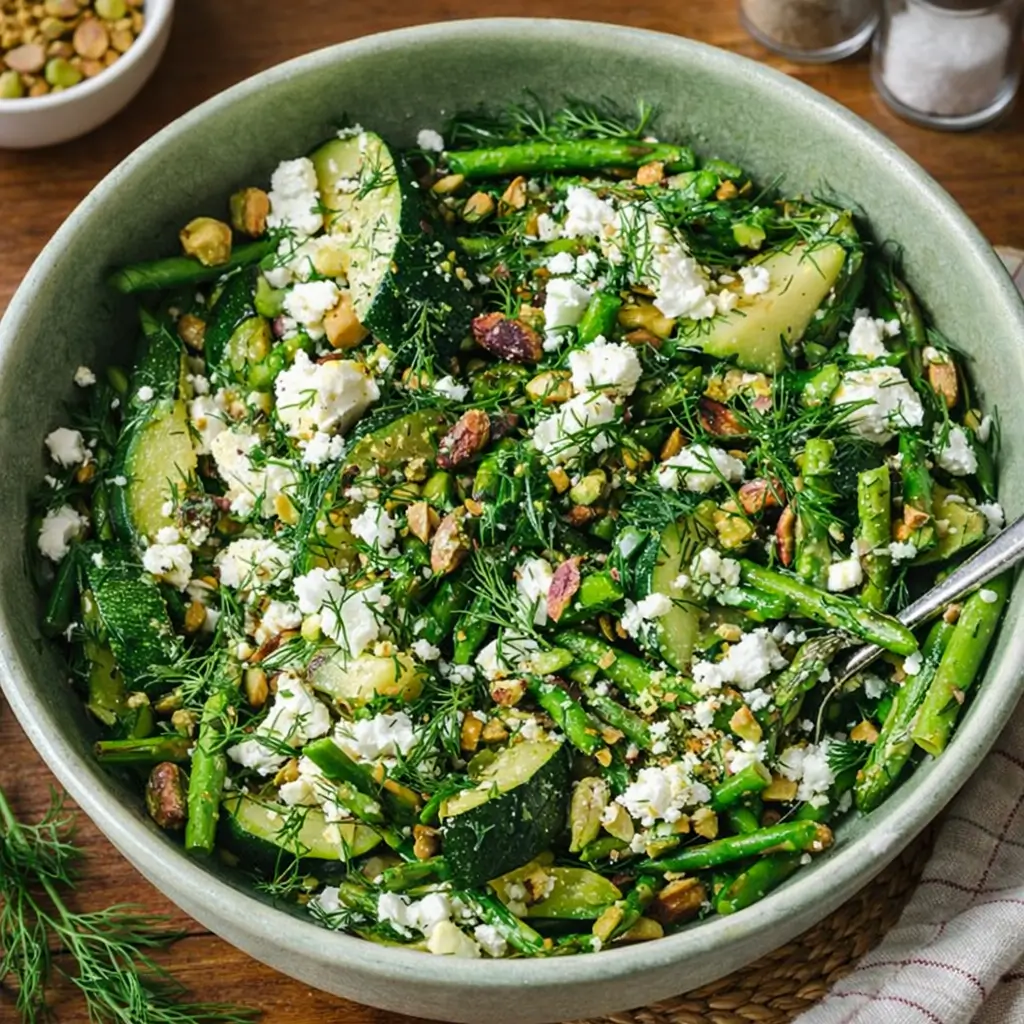
Sautéed Spring Vegetable Salad is the absolute best way to celebrate the arrival of warmer weather and fresh garden produce. When the sun starts peaking through the clouds, I find myself craving something light yet deeply satisfying, and this Sautéed Spring Vegetable Salad hits every single mark. It combines the crunch of fresh asparagus with the buttery texture of seared zucchini, all topped with salty feta and earthy pistachios. If you are tired of the same old soggy steamed greens, this dish will change your kitchen game forever. I remember the first time I made this for my kids; they actually asked for seconds of a green vegetable! That is basically a miracle in my house. Whether you are hosting a backyard barbecue or just trying to get a quick dinner on the table after a long day at work, this recipe brings a touch of gourmet flair without any of the stress.
What is Sautéed Spring Vegetable Salad?
At its heart, this dish is a warm, composed salad that bridges the gap between a traditional side dish and a fresh garden bowl. Unlike cold salads that can sometimes feel a bit uninspiring, this version uses a quick sear to bring out the natural sugars in the vegetables. We take peak-season zucchini and asparagus, give them a high-heat bath in avocado oil, and then dress them while they are still radiating heat. The warmth helps the lemon Dijon vinaigrette soak right into the veggies, creating a flavor profile that is bright, zesty, and incredibly savory. It is a flexible dish that feels fancy enough for a dinner party but is simple enough for a Tuesday night.
Reasons to Try Sautéed Spring Vegetable Salad
You should definitely give this recipe a go because it is incredibly fast, taking only about thirty minutes from your cutting board to your dinner table. Since we use seasonal ingredients, the flavors are at their absolute peak, meaning you do not need much to make them shine. It is also a fantastic way to eat the rainbow and keep your health goals on track without feeling like you are munching on grass. The combination of textures—the snap of the asparagus, the creamy feta, and the crunch of pistachios—keeps every bite interesting. Plus, if you have picky eaters who usually dodge their greens, the honey-sweetened dressing and salty cheese usually win them over. It is low-carb, vegetarian-friendly, and naturally gluten-free, making it a safe bet for almost any crowd you are feeding.
Ingredients Needed to Make Sautéed Spring Vegetable Salad
- Avocado Oil: You need 2 tablespoons of this because it has a high smoke point, which is perfect for getting that golden sear on the zucchini.
- Zucchini: Grab 2 medium ones, making sure they are firm and bright green.
- Asparagus: You will want 2 bundles. Look for stalks that are firm with closed, compact tips.
- Kosher Salt and Black Pepper: Just a pinch and a few turns of the grinder to enhance the natural flavors.
- Crumbled Feta: 1/3 cup of this salty goodness adds the perfect creamy contrast.
- Salted Pistachios: 1/3 cup, lightly crushed, provides a wonderful nutty crunch.
- Fresh Dill: 2 to 4 tablespoons of chopped dill brings that signature spring aroma.
- Extra Virgin Olive Oil: 1/4 cup serves as the rich base for our homemade dressing.
- Lemon Juice: 1 tablespoon of fresh-squeezed juice adds necessary acidity.
- White Wine Vinegar: 1 tablespoon to give the dressing a little extra punch.
- Honey: 1 tablespoon to balance out the tartness of the lemon and vinegar.
- Dijon Mustard: 1 teaspoon helps emulsify the dressing and adds a tiny bit of spice.
Instructions to Make Sautéed Spring Vegetable Salad – Step by Step
Step 1: Prep Your Veggies and Crunchies
First, you need to get your ingredients ready for their big moment in the pan. Wash and dry your zucchini and asparagus thoroughly because wet vegetables will steam rather than sear. Cut the ends off the zucchini and slice them into thick rounds, about 3/4 to 1 inch thick. For the asparagus, snap off the woody bottom ends and cut the remaining stalks into 2-inch pieces. To handle the pistachios without making a mess, toss them into a Ziplock bag and give them a light whack with a rolling pin or a heavy pan. This Step by Step preparation ensures that once the stove is on, you can move quickly and keep the textures perfect.
Step 2: Whisk the Liquid Gold Dressing
In a small bowl, combine your extra virgin olive oil, fresh lemon juice, vinegar, honey, and Dijon mustard. Give it a vigorous whisk until the honey is dissolved and the oil has blended with the acids into a smooth, slightly thickened vinaigrette. Add a tiny pinch of salt and pepper here, but keep it light since the feta and nuts later on are quite salty. Setting this aside now allows the flavors to meld while you focus on the hot work. Following this Step by Step order means your dressing is ready the second the veggies leave the heat.
Step 3: Get That Perfect Zucchini Sear
Heat your large sauteuse pan over medium-high heat and add the avocado oil. Once you see the oil shimmering, place the zucchini slices in the pan, flat side down. Leave them alone for about 3 to 4 minutes! Resisting the urge to move them is the secret to getting that beautiful, caramelized brown crust. This browning adds a depth of flavor that you just cannot get from boiling or light sautéing. Mastering this Step by Step technique is what transforms simple squash into a restaurant-quality dish.
Step 4: Add the Asparagus and Finish the Cook
Flip those golden zucchini slices over and toss the asparagus into the pan. If your asparagus is particularly thick, you might want to blanch it in boiling water for two minutes beforehand to keep it tender. Season the mix with a little salt and pepper. Sauté everything for another 3 to 5 minutes. You are looking for “al dente”—vibrant green and tender but still possessing a slight snap when you bite into it. Using this Step by Step approach prevents the zucchini from turning into mush while the asparagus cooks through.
Step 5: The Grand Assembly
Transfer the warm vegetables to your favorite serving platter. While they are still steaming, sprinkle the crushed pistachios, crumbled feta, and fresh dill over the top. Drizzle as much of that lemon Dijon dressing as your heart desires. The heat from the vegetables will slightly soften the feta and release the oils in the dill, making the whole kitchen smell like a dream. This final Step by Step assembly is where the magic happens, turning individual components into a cohesive, stunning salad.
What to Serve with Sautéed Spring Vegetable Salad
This salad is a versatile player on any menu. It pairs beautifully with a grilled piece of salmon or a lemon-herb roasted chicken. If you are keeping things plant-based, it serves as a wonderful bed for some crispy chickpeas or a side to a hearty quinoa pilaf. Since it has those bright Mediterranean notes from the feta and lemon, it also fits perfectly alongside a toasted loaf of crusty sourdough bread.
Key Tips for Making Sautéed Spring Vegetable Salad
One major tip is to avoid overcrowding your pan. If you put too many vegetables in at once, the temperature drops and they start to release water, leading to soggy veggies. If your pan is small, just cook in two batches! Also, always use fresh lemon juice rather than the bottled stuff; the flavor difference is massive in a simple dressing like this. Finally, remember that the saltiness comes from the feta and pistachios, so be very conservative with the salt shaker during the cooking process.
Storage and Reheating Tips Sautéed Spring Vegetable Salad
This dish is definitely at its peak when served warm and fresh. However, if you have leftovers, you can store them in an airtight container in the fridge for up to two days. Keep in mind that the zucchini will soften further as it sits in the dressing. To reheat, I recommend a quick toss in a hot skillet for a minute or two rather than using the microwave, which can make the asparagus a bit rubbery. If you prefer, the leftovers actually taste quite good cold the next day, almost like a marinated veggie salad. Just wait to add the nuts until you are ready to eat again so they stay crunchy.
FAQs
Can I use frozen vegetables for this salad? I really wouldn’t recommend it. Frozen zucchini and asparagus tend to hold a lot of moisture and will become very soft and watery when sautéed. For the best texture, stick with fresh, crisp produce.
Is there a substitute for feta cheese? Absolutely! If you aren’t a fan of feta, goat cheese provides a similar tang and creaminess. For a dairy-free version, you can use a vegan feta or just add a few extra splashes of lemon and some sliced olives for that salty kick.
What if I don’t have avocado oil? You can use extra virgin olive oil, but be careful not to let the pan get so hot that it starts smoking. Grapeseed oil or light olive oil are also great alternatives with higher smoke points.
Final Thoughts
Making this Sautéed Spring Vegetable Salad is a wonderful way to bring a little sunshine into your kitchen regardless of the weather outside. It is proof that healthy eating does not have to be boring or time-consuming. I hope this recipe becomes a staple in your home just like it has in mine. There is something so rewarding about serving a dish that looks this beautiful and tastes even better. Now, go grab that zucchini and get cooking—your taste buds will thank you!
PrintSautéed Spring Vegetable Salad: Your New Favorite Healthy Side Dish
This warm sautéed spring vegetable salad features zucchini and asparagus lightly sautéed and topped with crushed pistachios, crumbled feta, fresh dill, and a bright lemon Dijon vinaigrette. A fresh, vibrant side dish perfect for spring and summer meals.
- Prep Time: 15 minutes
- Cook Time: 15 minutes
- Total Time: 30 minutes
- Yield: 6 servings 1x
- Category: Salad
- Method: Saute
- Cuisine: American
- Diet: Vegetarian
Ingredients
- 2 tablespoons avocado oil
- 2 medium zucchini, ends removed and sliced into 3/4–1 inch pieces
- 2 bundles asparagus, trimmed and cut into 2-inch pieces
- Pinch kosher salt
- Cracked black pepper, to taste
- 1/3 cup crumbled feta
- 1/3 cup salted pistachios, lightly crushed
- 2–4 tablespoons fresh dill, roughly chopped
- 1/4 cup extra virgin olive oil
- 1 tablespoon fresh lemon juice
- 1 tablespoon vinegar (such as white wine vinegar)
- 1 tablespoon honey
- 1 teaspoon Dijon mustard
- Pinch kosher salt (for dressing)
- Cracked black pepper (for dressing)
Instructions
1. Wash and dry the zucchini and asparagus. Remove the ends from the zucchini and trim the woody ends from the asparagus.
2. Slice the zucchini into 3/4–1 inch thick rounds and cut the asparagus into 2-inch pieces.
3. Place the pistachios in a zip-top bag and gently crush them. Wash, dry, and roughly chop the fresh dill.
4. In a small bowl, whisk together the extra virgin olive oil, lemon juice, vinegar, honey, Dijon mustard, kosher salt, and black pepper until well combined to make the dressing. Set aside.
5. Heat a large sauteuse pan over medium-high heat and add the avocado oil.
6. Once hot, place the zucchini cut-side down and sauté for 3–4 minutes without moving so they develop a golden sear.
7. Flip the zucchini, add the asparagus, and season lightly with kosher salt and cracked black pepper.
8. Continue sautéing for another 3–5 minutes until the asparagus is tender-crisp and the vegetables are cooked to your preference.
9. Transfer the sautéed zucchini and asparagus to a serving dish and allow them to cool slightly.
10. Top with crushed pistachios, crumbled feta, chopped dill, and drizzle with the lemon Dijon dressing.
11. Toss gently, taste for seasoning, and serve warm.
Notes
Best served warm immediately after tossing with the dressing.
Use salt sparingly because feta and pistachios already add saltiness.
If using very thick asparagus, blanch it in boiling water for 2–3 minutes first, then dry well before sautéing.
Very thin asparagus may only need a few minutes in the pan, so watch carefully to avoid overcooking.
Nutrition
- Serving Size: 1 serving